
ConvertKit Review 2026: Features, Pricing & Pros and Cons
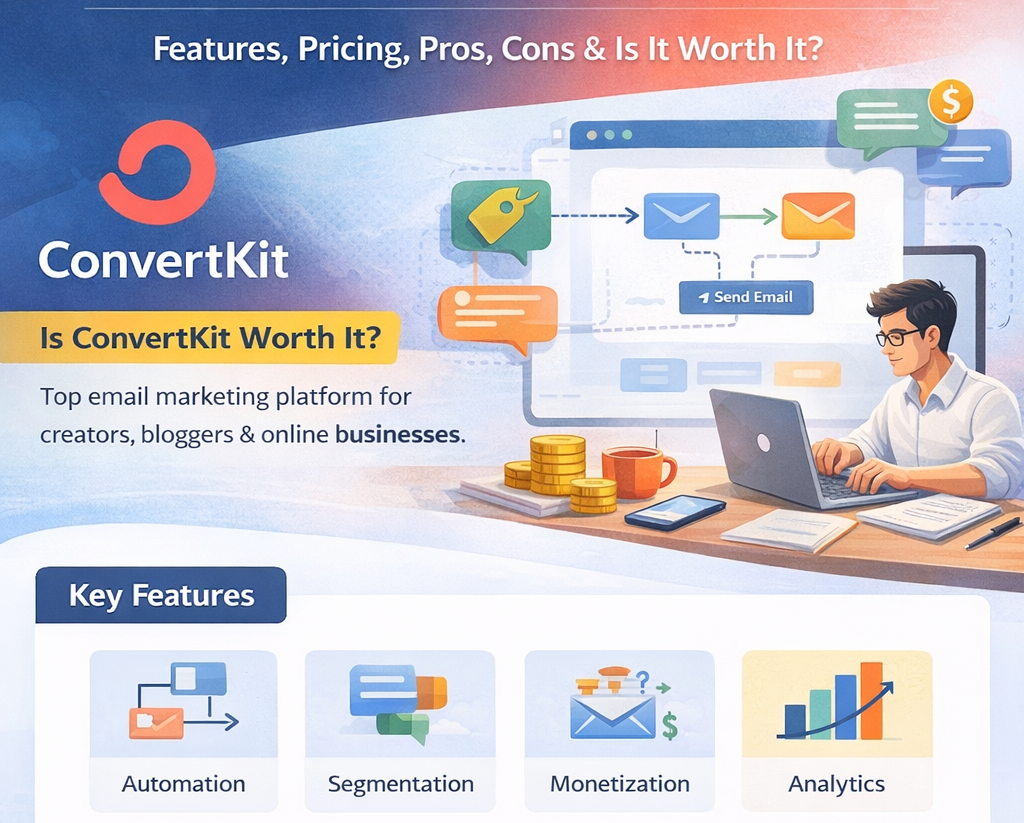
If you’re considering a new email marketing platform, this ConvertKit Review 2026 will help you decide if it’s the right choice. Email marketing remains one of the most powerful tools for creators. However, choosing the right software can feel overwhelming.
So, how does ConvertKit perform in 2026? Let’s break it down in simple terms.
ConvertKit Review 2026: Platform Overview
ConvertKit is built specifically for creators, including bloggers, coaches, and digital product sellers. Unlike traditional email tools designed for large companies, ConvertKit focuses on automation and audience growth.
At its core, the platform helps you turn subscribers into customers. In other words, it is designed to support your entire email funnel, not just send newsletters.
Key Features of ConvertKit in 2026
When evaluating any platform, features matter most. Fortunately, ConvertKit offers several strong tools.
ConvertKit Review 2026: Automation and Workflow Builder
One of its biggest strengths is the visual automation builder. With this tool, you can create workflows triggered by subscriber actions such as clicks, purchases, or form sign-ups. As a result, your emails can run automatically while you focus on content creation.
Smart Subscriber Tagging
Instead of managing multiple email lists, ConvertKit uses tags. Because of this system, you can segment your audience without duplicating contacts. This makes targeting much easier and more organized.
Email Campaigns and Sequences
You can send one-time broadcasts whenever needed. In addition, you can build automated sequences such as welcome emails, product launches, or sales funnels. Once set up, these sequences run on their own.
Forms and Landing Pages
ConvertKit also includes built-in forms and landing pages. Therefore, you don’t need extra software to start collecting subscribers.
ConvertKit Pricing Structure in 2026
Pricing depends on your subscriber count. While there is a free plan available, advanced automation features require a paid subscription.
As your audience grows, your monthly cost increases. For that reason, pricing can become a concern for larger creators. Still, many users feel the automation tools justify the expense.
Pros and Cons in This ConvertKit Review 2026
Every platform has strengths and weaknesses. Below is a simple breakdown.
Pros
Powerful automation tools
Flexible tagging system
Built specifically for creators
Clean and easy-to-use interface
Cons
Pricing rises as your list grows
Limited visual email design options
Fewer built-in discovery tools
Final Verdict: ConvertKit Review 2026
Overall, this ConvertKit Review 2026 shows that the platform remains a strong choice for automation-focused creators. If email funnels drive your revenue, ConvertKit offers flexibility and control.
On the other hand, if you only need a basic newsletter tool, cheaper alternatives may be enough. Ultimately, the right decision depends on how central email is to your business strategy.
Further Reading:
Beehiiv vs ConvertKit (2026): Which Newsletter Best for Creators?
Frequently Asked Questions
1. Is ConvertKit good for beginners in 2026?
Yes, ConvertKit is beginner-friendly. The interface is clean and easy to navigate, and the visual automation builder makes it simple to create email funnels without technical knowledge.
2. Does ConvertKit offer a free plan?
Yes, ConvertKit has a free plan that allows you to send email broadcasts, create forms, and tag subscribers. However, advanced automation features require a paid plan.
3. How much does ConvertKit cost in 2026?
ConvertKit pricing is based on your subscriber count. The more subscribers you have, the higher the monthly cost. Paid plans unlock full automation, integrations, and advanced reporting.
4. What makes ConvertKit different from other email marketing tools?
ConvertKit focuses heavily on creators and automation. Its tag-based segmentation system and visual automation builder make it ideal for running email funnels and selling digital products.
5. Can you sell products using ConvertKit?
Yes. ConvertKit allows creators to sell digital products, offer paid newsletters, and automate sales sequences directly through the platform.
6. Is ConvertKit worth the price?
For creators who rely on email automation and funnels to generate revenue, ConvertKit can be worth the investment. However, those who only need a basic newsletter tool may find cheaper alternatives.
© 2026 All Rights Reserved.